



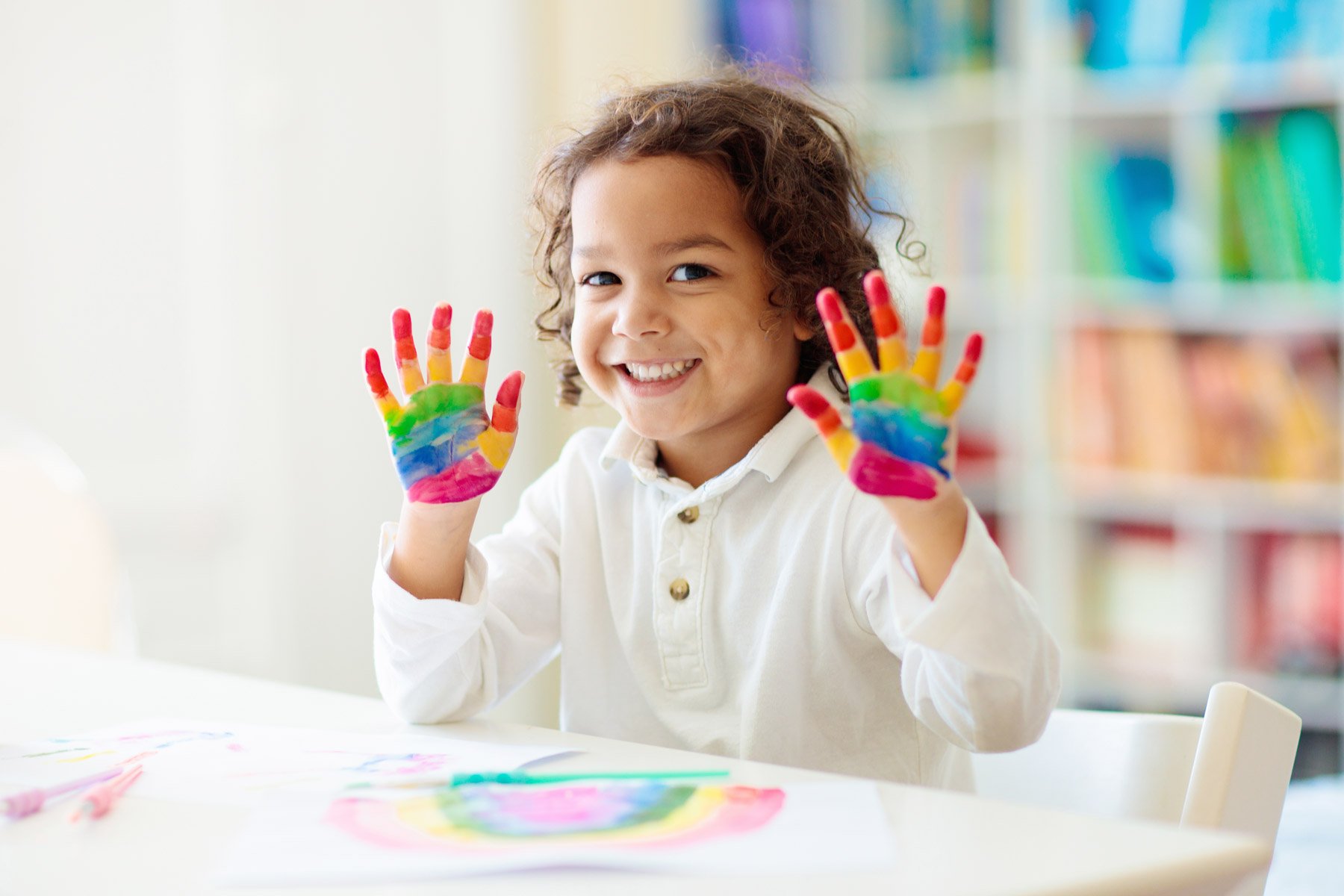
Kindergarten is an exciting milestone that lays the foundation for their educational journey. As parents, we play a key role in equipping our children with the skills and confidence they need to thrive in the classroom.
We'll explore a some valuable skills to help your child make a smooth transition to kindergarten. It's important to recognise that every child is different and learns at their own pace. Ultimately, the goal is not just to tick off a checklist of skills but to foster a love for learning and exploration that will serve them well throughout their academic journey.
By providing a supportive and nurturing environment tailored to each child's needs, you can help them flourish and develop the skills necessary for success in kindergarten and beyond.
1. Letters of the Alphabet
Learning some letters of the alphabet will provide your child with a head start on their educational journey. Early exposure to letters helps children become familiar with the building blocks of language, setting the stage for future reading, and writing success.
Introduce letters to your child throughout your everyday activities, such as pointing out letters on signs, labels and packaging. Alphabet books and flashcards can introduce letters in a fun and engaging way, associating each letter with familiar objects or animals. Sing alphabet songs and rhymes together to reinforce letter recognition and phonemic awareness. Encourage children to practice tracing and writing letters with pencils, crayons, markers or chalk.
2. Name Recognition
Help your child prepare for kindergarten by teaching them to recognise their name. This skill promotes a sense of responsibility and independence and allows children to identify personal belongings like backpacks and lunch boxes and labels they might encounter in the classroom.
To help young children recognise their name by sight, start by displaying their name frequently around their environment, like on their bedroom door, toy box or water bottle. Create puzzles with alphabet blocks or magnetic letters where the child arranges letters to form their name.
3. Grip a Pencil
Learning how to grip a pencil correctly lays the foundation for successful handwriting and fine motor skills development, allowing children to control their writing utensil with precision and ease, facilitating the formation of letters and numbers.
To begin, provide appropriately sized pencils or crayons for little hands to hold, ensuring a comfortable grip. Encourage your child to hold the pencil between their thumb and index finger, with the pencil resting on the middle finger for support. Fun activities like colouring, drawing, or tracing lines can assist in reinforcing proper pencil grip while allowing for creativity and experimentation. If your child is struggling to master the skill, consider investing in a pencil grip aid to assist young children in learning how to grip a pencil correctly.
4. Write Your Name
In preparing your child for kindergarten, learning how to write their name to the best of their ability is a significant milestone, as they communicate their identity in written form, enabling them to take ownership of their work.
Introduce your child to the letters of their name and demonstrate how to write them, tracing them on paper or in sensory materials like sand or salt. Provide opportunities for practice using different writing tools such as crayons, markers, or chalk, encouraging them to experiment with forming letters on their own. Use name puzzles or letter blocks to help children visually identify the letters and sequence the letters of their name.
5. Scissor Skills
In preparing your child for kindergarten, learning how to write their name to the best of their ability is a significant milestone, as they communicate their identity in written form, enabling them to take ownership of their work.
Introduce your child to the letters of their name and demonstrate how to write them, tracing them on paper or in sensory materials like sand or salt. Provide opportunities for practice using different writing tools such as crayons, markers, or chalk, encouraging them to experiment with forming letters on their own. Use name puzzles or letter blocks to help children visually identify the letters and sequence the letters of their name.
6. Colours
Learning to name and recognise basic colours — red, orange, yellow, green, blue, purple, black, brown and white, helps children develop visual perception skills and distinguish differences among objects as they learn and explore the world around them.
Introduce colours to children with colourful toys, allowing them to discover the different hues. Use everyday objects to point out and name colours during your daily routines, such as identifying the colour of fruits or clothing. Play simple colour sorting games using objects or picture cards, encouraging children to match items of the same colour. Engage children in creative art projects like painting where they can mix primary colours to discover secondary colours and experiment with various shades and tones.
7. Numbers
Learning numbers, one through to ten, gives children a head start in the world of mathematics as they can begin learning to count, recognise quantities, and understand basic numerical concepts.
Start by using everyday opportunities for counting into daily routines, such as counting steps, toys, or snacks. Use visual aids, such as number charts, flash cards or blocks, to help visually reinforce what different numbers represent. Interactive songs and games that involve counting, like "Ten in the Bed," help to reinforce these numbers in memory through repetition and melody.
8. Shapes
Learning about shapes helps children to understand spatial relationships and recognise patterns, which are fundamental skills in mathematics and geometry.
Use shape-themed toys or puzzles, allowing children to explore and manipulate different shapes while learning their names. Create shape scavenger hunts where children search for objects in the environment that match specific shapes. Use art and craft activities to encourage children to create shapes using materials like playdough, popsicle sticks, or cardstock. Play games, encouraging children to identify and name shapes in their everyday surroundings.
9. Days of the Week
Understanding the days of the week helps children comprehend the concept of time, anticipate upcoming events, and follow classroom schedules. This knowledge also lays the foundation for developing basic calendar skills and understanding concepts like yesterday, today, and tomorrow.
Use songs or rhymes, like Finny the Shark Days of the Week or The Singing Walrus Days of the Week, that feature the days of the week, making learning fun and memorable. Create a visual calendar or chart displaying the days of the week, and review it daily with the children, discussing what activities they plan to do on each day.
10. Months of the Year
Learning the months helps children to understand time and chronological order and lays the foundation for learning about season and holidays, enabling them to comprehend the sequence of events and anticipate future occurrences.
Use a pictorial representation outlining the months of the year and revisit it regularly, discussing what special events are associated with each month.
11. Birthday
Learning your birthday is an important milestone for young children and can help to strengthen their personal identity and enhance their understanding of basic concepts like time and age.
Use a calendar to visually show your child when their birthday occurs, marking the day with a special sticker or drawing. You can incorporate songs or rhymes that feature their birth date to help make it easier for children to remember. Using repetition and melody helps to reinforce the date in their memory in a fun and engaging way.
12. Sorting
Learning about sorting lays the groundwork for understanding basic math concepts and developing critical thinking skills. Sorting involves categorising objects based on various attributes such as size, colour, shape, or type, which helps children recognise patterns and similarities among objects.
Make available a variety of objects or materials with different attributes, such as colours, shapes, sizes, or textures. Encourage children to sort the objects into groups based on one attribute at a time, guiding them through the process with prompts and examples. Use visual aids like sorting mats or labelled containers with categories to help children sort the objects.
Play games like "Which One Doesn't Belong?" where children identify and remove objects that don't fit a given category.
13. Parts of the Body
Knowing the names and functions of body parts not only assists in effective communication but also promotes health and safety awareness. Understanding basic anatomy empowers children to take care of themselves and follow instructions related to personal hygiene and safety.
Sing songs or rhymes about body parts, pointing to each part of the body as you sing. Use mirrors to help children identify and name body parts on themselves and others. Play games like "Simon Says" where children mimic touching different body parts as you call them out.
14. Rhyming Words
Learning rhyming words lays the foundation for literacy and language development, helping children recognise patterns and develops phonemic awareness, allowing children to identify and manipulate individual sounds within words, which is essential for reading and spelling. By learning rhyming words, children improve their vocabulary, communication skills, and overall readiness for literacy instruction in kindergarten and beyond.
Read rhyming books or poems aloud, emphasising the rhyming words and encouraging children to identify them. Play rhyming games such as "I Spy" with rhyming objects — “I spy, with my little eye… something that rhymes with bear”. "Rhyme Time" is another fun game where children can find words that rhyme with a given word.
15. Hand Dominance
Identifying hand dominance is important for children entering kindergarten as it influences the development of fine motor skills and the ability to perform daily classroom tasks like writing, cutting and other classroom activities that require precision and coordination. Knowing whether your child is left or right-handed helps tailor the learning environment with appropriate tools and support.
Encourage your child to engage in various activities that require hand coordination, such as drawing, colouring, or playing with toys. Observe which hand they naturally prefer to use for these tasks. You can also try activities that involve reaching or grasping objects, like offering them a toy or a snack, and observe which hand they use to reach out. With these simple observations, you can identify their dominant hand and provide appropriate support and guidance as they master their fine motor skills.
16. Follow Instructions
Being able to follow instructions is paramount for children as they prepare for kindergarten, so they’ll be able fully engage in classroom learning experiences.
Use simple, clear language when giving instructions, ensuring that you have your child's attention before speaking. Break instructions down into smaller, manageable steps, and demonstrate each step if necessary. Offer praise and positive reinforcement when the child follows instructions correctly and provide gentle guidance or redirection if they struggle.
17. Hygiene and Self Care
In preparation for kindergarten, your child will need to be able to use the bathroom independently. Being able to manage bathroom visits independently with good hygiene practices ensures that children can attend to their needs promptly and without discomfort.
Establish a routine for bathroom breaks and encourage children to use the toilet at regular intervals. Create a safe and accessible bathroom environment with a child-sized toilet seats and a step stool for reaching sinks and toilets if necessary. Offer plenty of praise and positive reinforcement for their efforts, even for small achievements.
Gradually reduce assistance as they become more confident and be patient and supportive throughout the learning process. With consistency and positive reinforcement, children will develop the skills they need to use the bathroom independently.
18. Get Dressed
Learning to dress themselves is a valuable skill for the development of your child’s independence and confidence and promotes fine motor development.
Teaching young children to dress themselves involves breaking down the process into simple steps and providing plenty of practice opportunities. Help your child to recognise the back and front of an item of clothing, looking for labels and indicators that identify the front and back of clothes. Keep the clothing simple initially, with minimal buttons, buckles, laces and choose fasteners that are easy for small hands to manage until your child becomes more confident.
19. Cleaning Up
Cleaning up is a vital skill for children to learn in preparation for their kindergarten journey as it teaches responsibility, respect for space, safety, organisation, cooperation, and is an important life skill that children will use beyond kindergarten.
Teaching children to clean up after themselves is best done by modelling the behaviour yourself and praising children’s efforts when they help tidy up. Use visual cues like labelled bins or color-coded shelves to make it easier for children to know where items belong.
Encourage children to take ownership of their belongings and the space around them by emphasising the importance of cleaning up and its benefits. With consistent reinforcement and positive reinforcement, children can develop the habit of cleaning up after themselves and take pride in contributing to a clean and organised environment.
20. Sharing
Sharing is an important skill for kindergarten readiness as it promotes the development of social skills, conflict resolution, collaboration, and prepares children for future social interactions.
Encourage turn-taking in playtime activities and praise children when they share willingly. Provide opportunities for children to practice sharing with siblings or friends during playdates or in group environments. When conflicts arise over sharing, help children express their feelings and find mutually agreeable solutions. With patience and support, children can develop the important skill of sharing and cultivate empathy, generosity, cooperation, and positive social relationships.
21. Sitting Still
Mastering the art of sitting still and maintaining focus is an important skill for children as you prepare them for kindergarten. Your child will be expected to sit quietly, listen attentively, and focus on what’s happening without fidgeting and distracting others.
Teach children to sit gradually, starting with short sessions and progressively increase the duration over time. Begin by engaging them in calm activities they enjoy, like reading a favourite book or playing a quiet game. Praise their efforts, provide gentle reminders, and offer breaks for movement when needed. With patience and encouragement, children will learn this valuable skill over time.
22. Listen
Effective listening enables children to absorb and process information, which is essential for learning, understanding new concepts, following instructions, and engaging in meaningful communication with teachers and peers. In the classroom, children will be expected to listen attentively without interrupting, waiting for their turn to speak.
Begin by being a good role model; demonstrate active listening when your child speaks to you. Create a quiet environment free from distractions when conversing with them, ensuring they can focus solely on listening. Use simple, direct language, and maintain eye contact to keep their attention. Incorporate listening games like "Simon Says" or storytelling activities where children must answer questions about the story afterwards, which make listening both fun and educational. Read aloud, pausing to ask questions that encourage children to process what they’ve heard.
23. Book Handling
Learning to handle books independently, by holding them and turning pages, empowers children to explore and engage with stories and information on their own, encouraging a sense of curiosity and independence in their learning journey.
Read books together and show your child how to hold a book properly, with one hand supporting the book and the other hand gently turning the pages. Initially provide board books with sturdy pages that are easy for little hands to grip and turn on their own. Select books with engaging illustrations and stories that capture your child’s interest, encouraging them to explore books independently and practice holding the book and turning the pages at their own pace.
24. Separate from Parents
Learning to separate comfortably from your parents is an important skill for children as they prepare for kindergarten and school. It promotes independence and resilience, enabling children to navigate new routines and experiences with confidence.
Start with gradual exposure, introducing short separations in familiar environments, such as leaving them with a trusted caregiver while parents step away briefly. A predictable goodbye routine, such as a special hug or handshake, can be helpful to provide reassurance and consistency for children. Gradually increase separation time, building up to longer periods apart. Validate children's feelings and offer empathy while providing gentle encouragement and praise for their efforts. Highlight the exciting opportunities, experiences, and new friends they will encounter.
25. Craft Activities
Engaging in craft activities that include colouring, painting, gluing, and assembling art materials encourages creativity and self-expression, allowing children to explore their imagination and develop essential fine motor skills.
Provide a variety of materials and activities for creative exploration. Offer guidance and demonstrate basic techniques, such as colouring within lines, mixing paint colours or applying glue evenly. Encourage experimentation and creativity by allowing children to choose their own colours and materials for their artwork.
As children become comfortable with craft activities, gradually introduce more complex projects that challenge their skills and encourage problem-solving.



